
In today’s world, having a good online presence is key for New Zealand businesses. Improving your website’s search engine ranking brings more visitors to your site. This can lead to more sales.
A good online platform makes your site easier to use. It also helps more people find you on search engines. This is very important for New Zealand businesses wanting to grow online.
This article will show you 10 important steps to make your website rank better. By using these tips, you can improve your website’s SEO and beat your rivals.
Key Takeaways
- Understand the importance of website optimisation for New Zealand businesses
- Learn how to improve your website’s search engine ranking
- Discover 10 essential fixes to boost your website’s ranking
- Enhance your online presence and drive more traffic to your site
- Stay ahead of the competition with effective SEO strategies
The State of Website Optimisation in New Zealand
In New Zealand, having a good website is very important. Over 4 million people use the internet here. They look for products and services online. This is a big chance for businesses to find their customers with online marketing strategies.
Current Digital Landscape in NZ
The digital world in New Zealand is changing fast. Many Kiwis are online now. This makes the internet a key place for businesses to meet their customers.
Key Statistics on NZ Internet Usage
Here are some important facts about the internet in New Zealand:
| Statistic | Percentage |
|---|---|
| Internet Users in NZ | 85% |
| Online Shopping | 60% |
| Mobile Internet Usage | 75% |
Common Website Issues Affecting NZ Businesses
Many New Zealand businesses have website problems. These include slow sites, designs that don’t work on phones, and bad content. Fixing these problems is key to doing well online.
By knowing about website optimisation in New Zealand, businesses can do better online. They can stay ahead in the market.
Fix 1: Improve Your Website Loading Speed
Making your website load faster is key for better search rankings. A quick website makes users happy and search engines like it too. This can help you get seen more and maybe rank higher.
Why Speed Matters for NZ Users
In New Zealand, fast websites are what people want. Even with fast internet, slow websites make people leave quickly.
A slow website can hurt your site’s success. A one-second delay can drop conversions by 7%. To fix this, make images smaller, use browser caching, and CDNs.
“As the number of mobile users continues to rise, ensuring your website loads quickly is more important than ever. A slow website can lead to a poor user experience, negatively affecting your search engine rankings.”
Here are some ways to make your website faster:
- Compressing images to reduce file size
- Minifying CSS, JavaScript, and HTML files
- Leveraging browser caching to store frequently-used resources
- Utilizing CDNs to distribute content across different geographic locations
| Optimization Technique | Impact on Loading Speed |
|---|---|
| Image Compression | Reduces file size, improving load times |
| Browser Caching | Stores resources locally, reducing need for repeat downloads |
| Content Delivery Networks | Distributes content, reducing distance between users and resources |
By using these tips, you can make your website load faster. This will make users and search engines happy, helping your site rank better.
Fix 2: Mobile-Friendly Design Implementation
Most people in New Zealand use mobile devices to go online. A website that works well on phones is now a must. As said by
“Mobile-first design is not just about having a website that works on mobile devices, it’s about creating an experience that is tailored to the needs of your users, regardless of how they access your site.”
It’s important to make your website easy to use on phones. This helps users and can make your site rank better in searches.
Mobile Usage Statistics in New Zealand
More than 75% of New Zealand’s people use mobiles to go online. This change affects how websites are made and how we market online.
Knowing what devices people prefer in NZ is important for good mobile design. Some important facts are:
- Smartphones are the most used for the internet.
- Tablets are popular, mainly with older people.
- Desktops are still used a lot, for things like work.
Using a responsive design that works on all devices is key. This makes sure everyone has a good experience. For more tips on making your website better, check out SEO Monkey for website optimization services.
Fix 3: Optimise Your Content for NZ Audiences
Make your content better for NZ search terms and local needs. This makes your site more relevant and ranked higher. It also makes sure your content meets local needs.
Local Keyword Research Strategies
Good local keyword research is key. It finds popular search terms in New Zealand. Then, use these terms in your content.
NZ-Specific Search Terms
Use terms like “New Zealand” or “NZ” to reach local customers. This makes your site more visible in local searches.
Regional Variations (Auckland, Wellington, Christchurch)
New Zealand’s regions have their own trends and needs. Tailor your content for places like Auckland, Wellington, and Christchurch.
A business in Auckland might use local event or trend keywords. A Wellington business might use terms about the capital’s industries.
Understanding and using these regional terms makes your content more relevant. This boosts your website’s SEO.
Fix 4: Local SEO Strategies for New Zealand Websites
To make your website more visible in New Zealand, using good local SEO is key. A big part of local SEO is Google My Business optimisation.
Google My Business Optimisation
Google My Business is a great tool for managing your online presence. It helps you talk to customers. By making your Google My Business listing better, you can show up more in local searches.
Setting Up and Verifying Your NZ Business
To start, you must set up and verify your New Zealand business on Google My Business. You need to make a listing, put in the right business info, and check your business with a postcard or phone call.
Managing Reviews and Local Q&As
It’s also important to handle reviews and local Q&As well. Ask your customers to write reviews and answer them fast, no matter if it’s good or bad. Use the Q&A feature to answer common questions and share useful info with people who might visit your business.
By making your Google My Business listing better and talking to your customers, you can get better at local SEO. This will help more people find your New Zealand business.
Fix 5: Technical SEO Improvements
To make your website better, start with XML sitemap creation and submission. Technical SEO helps search engines understand and crawl your site well.
XML Sitemap Creation and Submission
An XML sitemap is like a map of your website. It lists all pages to help search engines find and index your content. You can make one using online tools or plugins, depending on your site.
Tools for NZ Websites
In New Zealand, there are tools to help with XML sitemaps. Yoast SEO plugin is great for WordPress sites. Google’s Sitemap Generator tool is also good. These tools make sure your sitemap is right and current.
Google Search Console Setup
After making your XML sitemap, submit it to Google Search Console. This tool shows how Google sees your site. It’s key for checking how your site does and finding ways to get better.
Key benefits of technical SEO improvements include:
- Search engines can crawl and index your site better.
- Your site will show up more in search results.
- You can watch your site’s performance with Google Search Console.
Improving your technical SEO can really help your website’s ranking and online presence.
Website Optimisation NZ: Professional Services vs. DIY Approach
Businesses in New Zealand face a big choice. Should they try to do SEO themselves or get help from experts? This choice can really affect how visible your website is and how well your business does.
When to Hire a Professional
Getting help from SEO experts is good if you don’t know how to make your website better. They have the skills and tools to help your website rank higher and get more visitors.
Assessing Your Technical Capabilities
First, think about what you can do yourself. If you don’t know about SEO or can’t keep up with changes, it’s best to get help. Ask yourself if you can:
- Find the right keywords
- Make your website’s pages better
- Create interesting content
- Get good links to your site
Time Investment Considerations
SEO takes a lot of time, whether you do it yourself or not. Think about how much time you’ll spend on:
- Learning about SEO
- Putting SEO plans into action
- Checking and changing your SEO work
If you don’t have much time or want to focus on other business things, getting professional help might be best. They can take care of the technical stuff, so you can run your business.
In short, whether to do SEO yourself or get help depends on what you can do, how much time you have, and what’s important to your business. Think about the good and bad of each choice to decide what’s best for your business in New Zealand.
Fix 6: Enhance User Experience (UX)
To make your website better, focus on how users feel. A good design makes it easy to use. This leads to more people staying on your site.
Navigation and Site Structure
A simple navigation helps users find what they need fast. This makes them happy and helps your site rank better.
Intuitive Menu Design
Your menu should be simple and clear. Don’t make it too complicated. Organize your content well.
Breadcrumb Implementation
Breadcrumbs help users know where they are. They make it easy to go back to where they were.
| Navigation Element | Benefits |
|---|---|
| Intuitive Menu | Easy content access, improved user satisfaction |
| Breadcrumbs | Clear site hierarchy, reduced bounce rates |
By improving user experience, you make your site better. It helps your visitors and your site’s ranking.
Fix 7: Implement Effective On-Page SEO
Good on-page SEO means using title tags and meta descriptions well. These are key for search engines. They help your site rank better and get more clicks.
Title Tags and Meta Descriptions
Title tags and meta descriptions are very important. They tell search engines what your pages are about. Your title tag should be short and describe the page. Your meta description should be catchy to make people want to click.
Incorporating Local Keywords
Using local keywords in your tags can help you reach more people in New Zealand. For example, adding your location can make you more visible in local searches. Check out our guide on how builders can stop wasting leads for more tips.
Character Limits and Best Practices
Stick to the character limits for title tags and meta descriptions. Title tags should be under 60 characters. Meta descriptions should be under 160 characters. This makes sure your SEO works right in search results.
Fix 8: Build Quality Backlinks from NZ Sources
Getting backlinks from New Zealand is key to making your site better. It shows search engines your site is good and fits with local people.
Local Link Building Strategies
There are many ways to get local links. Look for local directories and sites for your field. Also, find New Zealand influencers who might link to you.
Community Involvement Opportunities
Joining local groups can get you good links. Think about helping out at local events or charities. They often put sponsors on their sites.
Sponsorships and Events
Backing local events or groups is smart. For example, sponsoring a sports team might get you a link on their site.
| Link Building Strategy | Description | Potential Backlink Source |
|---|---|---|
| Local Directories | List your business in local directories and review sites. | NZ Business Directory, Local Reviews NZ |
| Community Involvement | Participate in or sponsor local events and charities. | Local Charity Websites, Event Sponsor Pages |
| Sponsorships | Sponsor local sports teams or events. | Sports Team Websites, Event Websites |
Using these local link building tips can make your site more visible and trusted in New Zealand.
Fix 9: Social Media Integration for NZ Audiences
To make your website more visible in New Zealand, using social media is key. People in NZ spend a lot of time on social media. By adding these platforms, you can get more people to visit your site.
Popular Social Media Platforms
Knowing the top social media sites in New Zealand is important. Different people like different sites.
Facebook and Instagram Usage
Facebook and Instagram are big in NZ. They have many ways to advertise and reach lots of people. Instagram is great for reaching young people, which is good for some businesses.
LinkedIn is very useful for B2B companies in New Zealand. It lets businesses connect with others, share stuff, and join groups. Adding LinkedIn to your site can help you reach more B2B customers.
By adding these popular social media sites to your website, you make it more fun and interactive for NZ visitors. This can bring more people to your site and might even lead to more sales.
Fix 10: Regular Analytics Monitoring and Adjustment
To make your website better in New Zealand, watch your analytics closely. This means knowing how your site does and using that info to get better online.
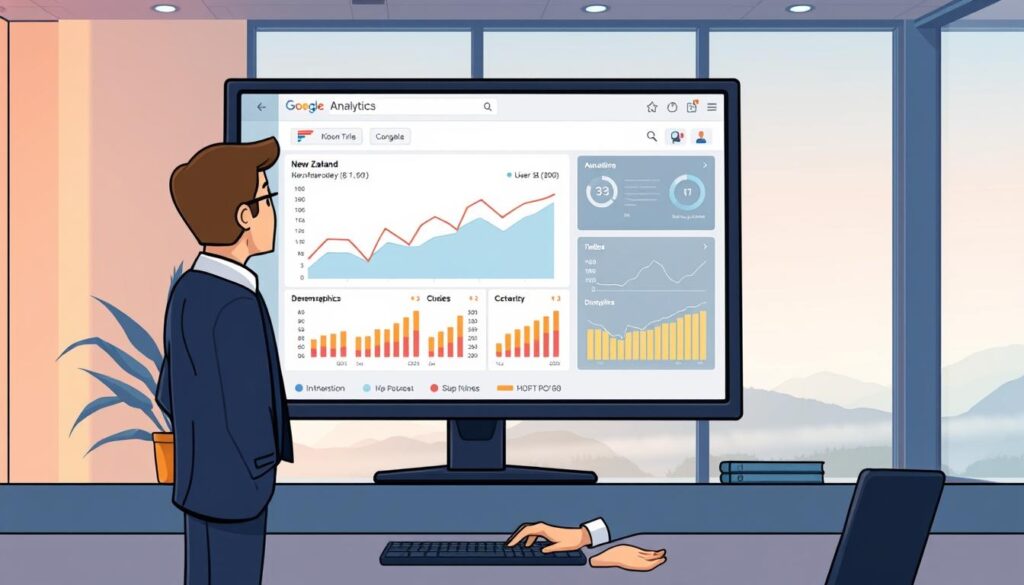
Setting Up Google Analytics for NZ Traffic
To track your site’s New Zealand performance, set up Google Analytics right. You need to make a property and make sure it tracks NZ traffic well.
Geographic Reporting Configuration
With Google Analytics, you can see where your NZ visitors come from. You can set up reports to look at how people act based on where they are.
Goal Tracking Implementation
Goal tracking in Google Analytics lets you see if your site is meeting its goals. This could be things like people filling out forms or buying stuff. It shows you what’s working and what’s not.
| Report Type | Description | Benefit |
|---|---|---|
| Geographic Reports | Understand where your NZ traffic is coming from | Helps in targeting specific regions |
| Goal Tracking | Measure the success of your website in achieving specific objectives | Improves conversion rates |
| Traffic Source Reports | Analyze the sources of your NZ traffic | Helps in optimizing marketing channels |
By watching your analytics and tweaking your plans, you can improve your website’s performance in New Zealand. This helps you reach your online goals.
Conclusion: Implementing Your Website Optimisation Strategy
By using the 10 fixes from this article, you can make your website better. This will help your site rank higher in New Zealand. A good plan for website optimisation is key to keeping your online presence strong.
To make your website better, keep working on it. Use tools like Google Analytics to check how your site is doing. Then, change things to stay ahead of others.
Improving your website is not just a one-time thing. Keep checking and updating your strategy. This way, your site will stay good for search engines and visitors.
Begin using these tips now. See how your website’s ranking gets better. With a strong plan, you can get more visitors and grow your business in New Zealand.